


 By Paul Peschel
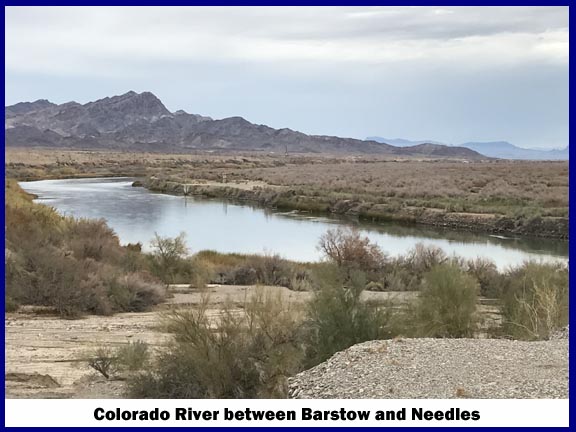
The Central Valley’s surface water reliability is driven primarily by hydrology and regulation in Northern and Central California (Sacramento-San Joaquin Delta watershed, Sierra snowpack, Delta export constraints), plus the operating and contractual frameworks of the federal Central Valley Project (CVP) and California State Water Project (SWP). The Colorado River does not directly supply the Central Valley; however, Colorado River shortages can materially affect Central Valley water availability through indirect pathways: (1) increased Southern California demand for SWP/CVP supplies and for transferred water originating in the Central Valley, (2) operational coupling in shared infrastructure (notably San Luis Reservoir and south-of-Delta conveyance), and (3) policy and economic feedback loops that alter Delta operations, transfer markets, and funding priorities.
Colorado River Water Rights and Why it Matters to the Central Valley
Colorado River governance is defined by the “Law of the River,” including the 1922 Compact, subsequent federal statutes, treaties, Supreme Court decrees, and operating guidelines for major reservoirs. In the Lower Basin, the Secretary of the Interior manages mainstream deliveries and operates key facilities (Hoover, Glen Canyon) pursuant to federal law and contracts.
The current situation is shaped by multi-decade aridification and critically stressed system storage. Reclamation’s May 2024 Record of Decision (ROD) for Near-term Colorado River Operations describes declining supplies, historically low Lake Powell and Lake Mead elevations, and the need for modified operational tools through the end of the 2026 operating year.
Critically for California water planners, Reclamation has formally launched a post-2026 process under NEPA because several governing instruments are scheduled to expire at the end of 2026, including the 2007 Interim Guidelines, the 2019 Drought Contingency Plans (DCPs), and relevant US-Mexico arrangements under the 1944 Water Treaty framework. Reclamation’s post-2026 page summarizes this and documents its January 2025 Alternatives Report as the basis for draft EIS development.
Even when California’s mainstream priority structure in the Lower Basin is relatively senior compared to Arizona and Nevada in shortage declarations (a point often emphasized in public reporting), the practical consequence of persistent Colorado River stress is a regional supply deficit that must be covered by “next-best” sources. For Southern California agencies, that typically means some combination of (a) greater reliance on SWP and shared Delta export capacity, (b) accelerated local supply development (recycling, desalination, storage), and (c) purchases of transferred water, much of which originates in the Central Valley.
QSA and Related Agreements: Direct Colorado River instruments that reshape California’s internal demand for SWP/CVP supplies
The 2003 Quantification Settlement Agreement (QSA) is the pivotal intrastate Colorado River arrangement in California. It quantified and stabilized key California Colorado River entitlements and enabled large conservation-and-transfer programs, especially Imperial Irrigation District (IID) conserved water transfers. Authoritative summaries (IID and Water Education Foundation) describe IID’s obligations to transfer conserved water: up to 200,000 acre-feet per year (AFY) to San Diego County Water Authority and, in combination, up to 103,000 AFY to Coachella Valley Water District and Metropolitan Water District, tied to efficiency improvements and substantial payments.
Why QSA matters to the Central Valley is less physical and more systemic:
- Baseline demand shift. By making certain large IID transfers and quantifying use, QSA helped Southern California agencies firm a major imported supply portfolio. When Colorado River conditions tighten further, those same agencies tend to increase their marginal demand for SWP deliveries or Central Valley-origin transfers, particularly for multi-year reliability and storage replenishment.
- Salton Sea externalities and funding competition. QSA is closely tied to Salton Sea mitigation obligations and governance arrangements (a recurring constraint in IID-led conservation and transfer expansions). That linkage matters because Colorado River shortage responses that increase IID conservation or alter IID transfer timing can trigger environmental compliance and mitigation funding needs, which then compete with or complement statewide investments that also influence CVP/SWP reliability.
- Legal and political defensibility. Because QSA’s transfers are contractually specified and embedded in a broader settlement structure, they tend to be “stickier” than purely discretionary, short-term transfers. That can make QSA water a planning anchor for Southern California and thus intensify pressure on SWP/CVP and Central Valley transfer supplies when the Colorado River portfolio is stressed.
SWP: Permits and Contracts, not contractor-owned water rights
SWP and CVP “rights” and why they are operationally intertwined with Colorado River stress. The SWP’s appropriative rights are held by the California Department of Water Resources (DWR) under state law and State Water Resources Control Board (SWRCB) permitting, while SWP contractors primarily hold contractual entitlements (Table A amounts) and allocation decisions are made annually by DWR based on hydrology, storage, and regulatory constraints. DWR’s SWP allocation explainer makes the Table A structure and annual allocation concept explicit.
The SWP is a statewide conveyance and storage system moving water from Northern California through the Delta and down the California Aqueduct; DWR’s SWP FAQ emphasizes the SWP’s broad service footprint, with water deliveries supporting large portions of California’s population and irrigated acreage.
CVP: Federal Project contracts with priority classes
The CVP is a federal reclamation project operated by the U.S. Bureau of Reclamation under federal reclamation law, contracts, and state water rights permits/licenses where applicable. CVP deliveries are governed by a complex priority structure including, notably, settlement and exchange contractors that often have higher priority than many other CVP contractors in shortage years, and annual allocation updates are used to implement those priorities.
Shared Infrastructure & Exchange Mechanisms
SWP and CVP are tightly coupled physically and operationally. San Luis Reservoir is explicitly a joint-use complex serving both projects, constructed by Reclamation and operated/maintained by DWR, and it functions as a major regulating reservoir for south-of-Delta supplies.
Separately, SWRCB documentation on SWP/CVP consolidated place-of-use (CPOU) petitions and exchanges highlights that DWR and Reclamation regularly seek temporary changes to enhance operational flexibility south of the Delta, implement exchanges, and optimize deliveries within existing allocations and regulatory limits, with explicit references to compliance with Delta constraints (including D-1641) and biological opinions.
Bottom line, the Central Valley’s water supply risk is primarily SWP/CVP and Delta driven, but Colorado River stress can amplify competition for the same SWP/CVP operational bandwidth and transferable supplies.
How the Linkages Translate into Central Valley Water Risk
Pathway 1: Substitution pressure on SWP exports (moderate to high risk)
When Colorado River deliveries or storage flexibility are reduced, Southern California agencies tend to substitute toward SWP supplies and stored SWP water. That substitution is constrained by Delta export rules, endangered species requirements, and water quality standards, so the system often expresses this increased demand as (a) higher competition for limited south-of-Delta pumping opportunities, (b) greater reliance on San Luis storage coordination, and (c) political pressure on Delta operations.
Central Valley implication: greater statewide competition for limited SWP/CVP export “windows” can increase the probability of lower allocations or tighter operational constraints for south-of-Delta users, including Central Valley agricultural service areas dependent on SWP or CVP conveyance.
Pathway 2: Transfer market pull on Central Valley supplies (high risk, high opportunity)
Colorado River shortage raises the marginal value of transferable water in Southern California and, indirectly, the price signal for Central Valley-origin water transfers and options. California’s transfer framework is well developed: DWR maintains a formal Water Transfers program and SWRCB administers statutory and petition-based processes intended to protect third parties and the environment.
Central Valley implication: in shortage conditions, Central Valley agencies and landowners can face stronger incentives to transfer water out of region (fallowing, groundwater substitution, reservoir reoperation, or exchange-based transfers). This can be net positive financially for transfer sellers, but it can reduce local availability unless carefully structured with protections (SGMA compliance, third-party impact mitigation, long-term land and community considerations).
Pathway 3: Regulatory and policy feedback loops (moderate risk)
As imported supply portfolios tighten, statewide negotiations over Delta standards, conveyance investments, and ecosystem protections can intensify. This can create additional uncertainty in SWP/CVP operations, even if Colorado River conditions are not a formal driver in the legal instruments governing Delta exports.
Central Valley implication: incremental regulatory tightening or litigation risk tends to show up first as operational conservatism, which reduces effective delivery reliability.
Pathway 4: Shared storage and operational coupling (low to moderate risk)
San Luis joint-use operations and SWP/CVP exchanges provide flexibility, but they also create an arena where statewide portfolio stress is concentrated. The CPOU and exchange frameworks are designed to maximize beneficial use of allocated supplies without increasing Delta diversions.
Central Valley implication: operationally, this is a resilience tool, yet it can also intensify competition for scheduling, storage space, and conveyance capacity during dry periods.
Summary of relative risk to Central Valley water availability
Low direct physical risk: Colorado River flow reductions do not directly cut Central Valley supplies.
Moderate to high indirect availability risk: substitution toward SWP/CVP exports and increased competition for constrained Delta operations.
High market and strategic risk/opportunity: Central Valley transfer sellers can capture value; Central Valley water users can face higher prices and reduced local optionality unless they retain hedged supplies.
Converting Colorado River Shortage into a Central Valley Net Positive: (Gulf and Salton Sea)
- Transfer and exchange agreements that monetize Central Valley flexibility
The Central Valley can leverage Colorado River shortage economics through structured products rather than pure spot transfers:
- Multi-year option contracts (call options) for drought years. Central Valley sellers receive annual option premiums; water is only transferred in defined shortage triggers. This preserves local use in wetter years and creates predictable funding for SGMA-compliant recharge, efficiency, or community mitigation.

- Exchange-for-forbearance structures. A Central Valley agency delivers SWP/CVP or locally conserved water to a Southern California agency; in return, that agency forgoes a portion of its Colorado River diversion or uses other mechanisms that leave water in Lake Mead (system conservation). This approach aligns with Reclamation’s recent emphasis on near-term system conservation tools through 2026.
- Interstate-aligned agreements (conceptual). Direct interstate export of California water is politically and institutionally difficult, but exchange structures can produce functionally similar outcomes by shifting who diverts from the Colorado River system, when, and at which reservoir elevation tiers. These structures must be designed to fit Reclamation accounting and contract rules and California transfer law protections.
- Gulf of California seawater import and desalination concept (brief explanation)
This concept contemplates seawater sourcing from the Gulf of California (Sea of Cortez), with desalination and conveyance to generate a large, drought-proof supply that could substitute for Colorado River diversions or reduce pressure on SWP/CVP transfers. The draft concept references a scale on the order of 1 million acre-feet per year and an indicative unit cost range of $2,700 to $3,400 per acre-foot (2024 dollars), depending on sizing and design assumptions.
Central Valley “net positive” logic is straightforward: if Southern California and/or Basin partners can procure a meaningful block of firm supply from a Gulf project, their marginal demand for Delta exports and Central Valley transfers can decline, leaving more SWP/CVP operational bandwidth for Central Valley reliability while also creating an investable regional infrastructure platform. In practical deal terms, a Central Valley agency could participate via (a) an offtake commitment (long-term purchase) that yields exchangeable supply value, (b) equity or development capital that earns returns funded by shortage-driven demand, or (c) a structured swap where Gulf-derived supply displaces Southern California demand for Central Valley transfers during drought years.
- Salton Sea brackish desalination and restoration concept (brief explanation)
This concept frames brackish desalination and restoration as a combined dust mitigation, habitat, and supply strategy, with a notional production target up to 500,000 acre-feet per year and an indicative unit cost range of $900 to $1,700 per acre-foot.
Central Valley “net positive” logic mirrors the Gulf strategy: additional firm supplies in the Colorado River service area reduce the call on SWP/CVP and on Central Valley transfer water. Further, Salton Sea-linked projects can be structured to relieve a persistent constraint embedded in IID conservation and transfer expansions: mitigation and restoration obligations that, if underfunded, can become a binding constraint on how much conserved Colorado River water is politically and legally scalable.
Conclusion
Colorado River shortage risk reaches the Central Valley primarily through substitution, competition, and market channels rather than physical hydrologic connection. The near-term posture through 2026 is dominated by Reclamation’s shortage and conservation actions and the broader post-2026 renegotiation process under NEPA.
For the Central Valley, the highest-probability impacts are indirect: stronger Southern California pull on SWP operational capacity and on Central Valley transfer supplies, with shared storage and exchange mechanisms serving as both resilience tools and competition points. California’s transfer institutions create a credible pathway to turn this stress into a net positive, but the net outcome depends on deal design: options and exchange-for-forbearance structures can monetize drought scarcity while preserving local reliability and aligning with SGMA and third-party protections.
Finally, large-scale augmentation concepts, including a Gulf of California seawater desalination import platform and Salton Sea brackish desalination coupled with restoration, are best evaluated as strategic “demand relief” tools: if they displace a meaningful share of Southern California’s incremental shortage demand for SWP/CVP and Central Valley transfers, they can improve Central Valley reliability while creating investable, shortage-driven infrastructure economics.
Legal note: This paper provides policy and legal-technical analysis for planning purposes and is not legal advice for any specific transaction or dispute.
Paul G. Peschel, P.E., is a California-licensed civil engineer and water and infrastructure executive with 35+ years of leadership experience across major public agencies. He has served as Assistant General Manager for Water Operations at Modesto Irrigation District, General Manager at Kings River Conservation District, and General Manager at Hi-Desert Water District, leading capital programs, operations, and governance support for boards and stakeholders. His work spans water resources, flood control, energy, and enterprise services, with experience in regulatory compliance, complex contracting, and multi-agency negotiations.
DISCLAIMER OF RESPONSIBILITY; Waterwrights.net strives to provide its clients with the most complete, up-to-date, and accurate information available. Nevertheless, Waterwrights.net does not serve as a guarantor of the accuracy or completeness of the information provided, and specifically disclaims any and all responsibility for information that is not accurate, up-to-date, or complete. Waterwrights.net’s clients therefore rely on the accuracy, completeness and timeliness of information from Waterwrights.net entirely at their own risk. The opinions expressed in this report are those of the author and do not represent any advertisers or third parties.
ALL RIGHTS RESERVED. Copyright 2025 by WaterWrights.net