

 WaterWrights.net is now sharing Weekly Updates in partnership with our friends at WaterOne.ai. We all know SGMA is evolving rapidly. And this is another step for us to keep everyone informed.
Must Knows this Week
Tule Subbasin Talks on a Canal Alternative Are Faltering, and Lower Tule Is Drafting Pumping-Based Accounting for October 2027
Building on our September 14 coverage of the State Water Board’s interim plan, Tea Pot Dome Water District staff reported that two GSAs withdrew from an initial proposal for pumping limits near the Friant-Kern Canal and that confidence in a coordinated alternative was fading, with a draft state plan expected around January; staff said a moratorium could follow in March or April 2027 if no alternative is reached, and State Water Board materials target April for adoption. At Lower Tule River Irrigation District, staff said a coordinated canal plan was unlikely for now and expects the state’s interim plan to use pumping-based accounting if the basin offers no adequate alternative; staff also proposed moving the district’s own accounting from ET-based consumption to groundwater extracted (metered, or estimated from ET where meters are lacking) starting October 1, 2027, and targeted possible January 2027 adoption of a Corrective Subsidence Management Order that could restrict new lower-aquifer wells. The state’s two-mile canal-zone moratorium is proposed, not in effect, and no accounting change, return-flow rule or pumping cap was adopted. Read More
 Eastern San Joaquin Caps Domestic Well Mitigation at $30,000 per Claim, While a Typical Replacement Runs About $55,000
Building on our August 17 report that the authority relaunched its domestic well mitigation program with a $200,000 fund, the Eastern San Joaquin Groundwater Authority board voted unanimously to cap domestic well mitigation payments at $30,000 per eligible claim, with bottled and other replacement water not counted toward the limit, matching the $30,000 limits it found in Madera, Delta-Mendota and Merced. Self Help Enterprises estimated a typical full well replacement at about $55,000, staff cautioned that state officials might push back on caps, and the board said it could revisit the limit; no Self Help contract was approved. Read More
 Metropolitan Is Weighing Taking $70 Million Upfront to Leave 14,000 Acre-Feet of State Project Water in the Delta in Each Qualifying Year
Metropolitan Water District staff outlined a proposal to contribute 14,000 acre-feet of State Water Project Table A supplies to the state’s Instream Flow Water Purchase Program in each participating year, only when the SWP allocation is at least 30%, across 10 qualifying years, which need not be consecutive (140,000 acre-feet in total), in exchange for a $70 million upfront payment. Directors questioned the roughly $500-per-acre-foot implied payment and the risk to SWP-dependent areas; staff said contributed water could not be recovered through the program, and board action is planned for November or later in 2026. Read More
 Vina’s Board Rejected Tighter Groundwater Thresholds 2–3, and Comments on the Draft Plan Amendments Close October 26
Following our September 14 report that Vina’s board asked staff to bring back Alternative 3 and revisit the non-dry-year language, the Vina GSA board rejected Alternative 3 on a 2–3 vote; it would have set minimum thresholds 40 feet below measurable objectives outside the Chico Management Area (existing thresholds average about 63 feet below), and sent all three threshold alternatives to its Stakeholder Advisory Committee. In a separate 4–1 vote it directed staff to draft removal of the non-dry-year condition DWR flagged, which counsel stressed is not a plan amendment; comments on the draft Periodic Evaluation and amendments are due October 26, ahead of possible joint-board adoption in December. Read More
 Greater Kaweah Authorizes Up to $10 Million in Penalty Revenue for Supplemental Water Purchases and Liens for Unpaid Penalties
Following our September 8 report on Greater Kaweah’s plan to retire Tier 1 and Tier 2 allocations with purchased water, the Greater Kaweah GSA board kept Water Year 2027 tier penalty rates unchanged at $250, $250 and $500 per acre-foot (two directors opposed) and authorized staff to negotiate and purchase supplemental water, capped at $10 million from penalty revenue, with the purchasing mix and program rules still unsettled. After a public hearing with no oral comments, it also authorized staff to record certificates of lien for delinquent tier penalties; staff reported about $1.5 million in tier-penalty payments over the preceding three months, while one director cited roughly $4.5 million unpaid from last year. Read More
Trends in the Valley
New Water Supply Is Getting Priced Out of Reach.
At Wheeler Ridge-Maricopa Water Storage District, all four growers funding the district’s Sites Reservoir participation indicated on a nonbinding basis that projected costs, roughly $1,275 to $2,430 per acre-foot in one analysis, were too high, though two want further analysis. Estrella-El Pomar-Creston GSA heard that buyers of unused Nacimiento water would pay a variable delivery cost averaging about $205 per acre-foot, with a still-negotiable share of fixed costs that run about $190 per acre-foot for operations and maintenance and $730 for debt service, economics a member said do not currently work for growers, and Chowchilla Water District discussed a rough $5 million estimate, floated at a workshop, just to study a dam raise that would add about 50,000 acre-feet of storage capacity.
2027 Budgets Are Landing, and Several Push Costs Up for Growers.
Tulare Irrigation District approved a 2027 assessment of $100 per acre, up from $95, and Semitropic Water Storage District set preliminary 2027 charges of $88 and $71 per acre-foot, up from $82 and $60, for a November 11 hearing. Vandalia Water District‘s initial 2027 budget shows a $71,934 gap, and at Lower Tule River Irrigation District the SGMA implementation line rose from about $425,000 to about $1.3 million in the approved budget, even as the overall district budget fell about 3.4% on lower water costs.
Agencies Are Reviewing Groundwater Models and Filling Data Gaps.
At South Fork Kings GSA, EKI found the 2025 Tulare Lake model’s local calibration had a 22% normalized water-level error and a mean error of about 50 feet, and paused further evaluation until the 2026 update. Consolidated Irrigation District approved about $20,000 as its one-third share of an EKI review of the model MAGSA’s consultant built for the Aquaterra project, and Greater Kaweah GSA‘s Technical Advisory Committee recommended filling modeling gaps after staff found lower-aquifer thresholds below estimated critical head; no study or cost has been approved.
About WaterOne
WaterOne is a Fresno-based water management firm serving Central Valley growers, founded by a team from Stanford that combines agricultural expertise with AI engineering. The team offers easy-to- adapt water management tools designed for SGMA. The company actively monitors GSA and irrigation district board meetings, maintaining a database of rule changes for each district while working directly with growers across the Central Valley. You can access their updates on major meetings at GSAs, Irrigation Districts, and State Board from their GSA Database from https://gsa.waterone.ai.
About the Team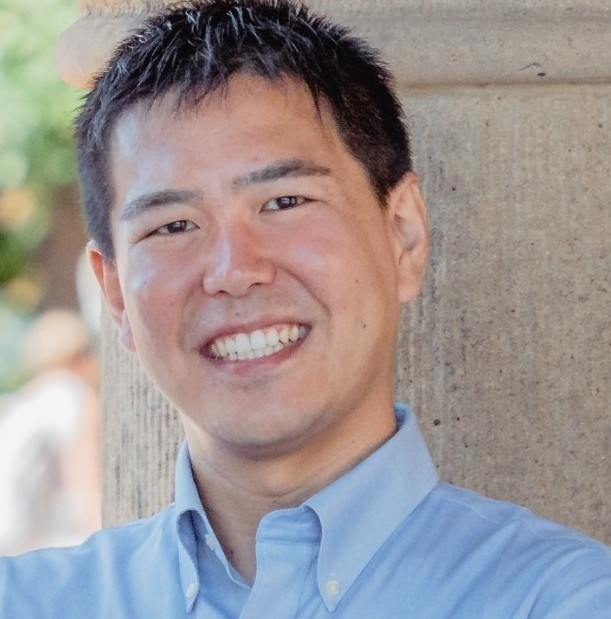
Ryo Takanashi is Co-Founder & Chief Product Officer at WaterOne. He brings extensive expertise in commodity trading and agricultural engineering. As the youngest Chief Corn Trader for Japan’s largest commercial importer, Ryo managed 20% of the country’s corn imports while stationed in Kansas and Minneapolis. With an Urban Engineering background, he combines technical infrastructure knowledge with hands-on commodity market experience that required constant analysis of crop conditions, yield forecasts, and supply chain logistics. He holds MS-MBA from Stanford.
Tomo Kumahira is Co-Founder & CEO of WaterOne. Prior to starting WaterOne, Tomo managed one of Africa’s largest agro-forestry operations as CFO, partnering with small-scale 30,000 farmers and covering 40% of commercial afforestation in Kenya. He began his career in natural resources investment at Mitsubishi Corporation. Tomo holds MS-MBA from Stanford (Knight-Hennessy Scholar and Rotary Global Scholar).
 Disclaimer
Waterwrights.net strives to provide its clients with the most complete, up-to-date, and accurate information available. Nevertheless, WaterWrights.net does not serve as a guarantor of the accuracy or completeness of the information provided, and specifically disclaims any and all responsibility for information that is not accurate, up-to-date, or complete. WaterWrights.net’s clients therefore rely on the accuracy, completeness and timeliness of information from WaterWrights.net entirely at their own risk. The opinions expressed in this report are those of the author and do not represent any advertisers or third parties.
ALL RIGHTS RESERVED. Copyright 2026 by WaterWrights.net