



 By Sarah Bardeen, Sr Center Communications Manager, PPIC Water Policy Center
Feelings were running high—and interest was evident—as hundreds of people turned out for our fall conference last week in Sacramento. The lunchtime program featured a panel of five experts representing water interests from across the state.
The day opened with a short video celebrating the PPIC Water Policy Center’s first 10 years, followed by a welcome by center director Letitia Grenier, who thanked the audience for braving the rain to attend. “An atmospheric river decided to come to our water conference this year, which is very on-brand,” she said with a smile.
Associate center director Caity Peterson set the stage for the day’s conversation by describing the symbiotic relationship between California and the federal government when it comes to managing the state’s water.
“We rely on the federal government for critical data, services, the expertise of agency staff—and for money. Now that partnership is changing, and we don’t know quite yet where things are going to land,” said Peterson. “These conditions create a lot of question marks.” She outlined the role research could play in helping the state navigate this difficult moment.
Senior fellow Jeff Mount moderated the conversation, asking the panelists to comment on the changes underway. While feelings among the panelists were mixed, most agreed that personnel reductions at federal agencies are the most worrying change.
“We are being hamstrung by the loss of a lot of really good people in our federal agencies,” said veteran San Joaquin Valley grower Cannon Michael. While Michael supports tackling waste in government, he said the losses are making it hard to get things done. “You hear things about $500 toilet seats and waste in government, but human beings aren’t toilet seats. They are doing a lot of worthwhile activities that are helping us run our system. It’s been challenging to see a lot of very competent people leaving.” What’s more, he said, “rebuilding that capacity is going to be tough.”
David Guy of the Northern California Water Agency said that a good set of priorities is emerging from the administration but, like Michael, he’s concerned there may not be sufficient personnel to implement those priorities, given the cuts. Still, he said, “let’s give a shout-out to our federal colleagues who remain. They’re doing amazing work; a lot of them worked through the shutdown.”
The NGO community has similarly seen grant reductions and cancellations in recent months, said The Nature Conservancy’s Caitrin Chappelle, though the full impacts of the staffing reductions have yet to hit. In this context, she said, the passage of last year’s Proposition 4 “shows the support of citizens and taxpayers to invest in climate resilience, forest management, and ecosystems.” But this money “will go out the door quickly. Long-term, sustainable funding sources are crucial.”
Recent stories like the record returns of Coho salmon to North Coast rivers, and the revival of the Klamath River, are giving people hope, said Chappelle. The state “should build on that work so that Californians can see their investment is working.”
Where did the panel land? Partnerships. For water veteran Pete Silva, it was time to survey the possibilities. “I think the silver lining is that it will force us to think differently, more creatively. Maybe it’s going to force us to think outside the box. How do you incentivize the private sector to come to the table?”
Alison Collins of the California Department of Water Resources concurred. “We can start to rely on state and local partnerships to develop some redundancies,” though, she conceded, “it’s going to take some time.” David Guy sang the praises of recent partnerships in floodplain reactivation. “Collaborations insulate you from the reverberations of a changing administration.”
But, he said, “water is not partisan. People are partisan, but water is not partisan. Let’s get people working in unison.”
“Durable solutions,” said Cannon Michael, “are the ones that include multiple stakeholders. We’ve got a state that’s worth fighting for. Let’s take care of the state we love.”
We invite you to watch the event videos:
10 Years of the PPIC Water Policy Center
California Water and a Changing Federal Partnership – Welcome & Presentation
California Water and a Changing Federal Partnership – Panel Conversation
Sarah Bardeen is the Senior Center Communications Manager at the Public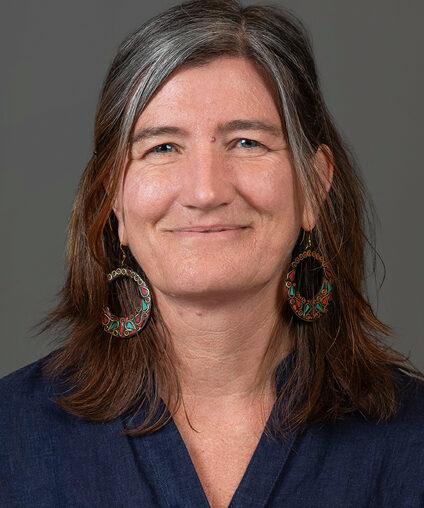 Policy Institute of California, Water Policy Center. WaterWrights.net thanks her and the PPIC for permission to reprint this article.
DISCLAIMER OF RESPONSIBILITY; Waterwrights.net strives to provide its clients with the most complete, up-to-date, and accurate information available. Nevertheless, Waterwrights.net does not serve as a guarantor of the accuracy or completeness of the information provided, and specifically disclaims any and all responsibility for information that is not accurate, up-to-date, or complete. Waterwrights.net’s clients therefore rely on the accuracy, completeness and timeliness of information from Waterwrights.net entirely at their own risk. The opinions expressed in this report are those of the author and do not represent any advertisers or third parties.
ALL RIGHTS RESERVED. Copyright 2025 by WaterWrights.net