




 By Edward Ring, this first appeared in What’s Current? California’s Water & Energy Future
For water users and water watchers, October 1st was New Year’s Day. It’s a good time to step back and comment on where we’re headed with water policy and water projects.
There is no single variable that affects how much water is available to Californians than how we manage the Sacramento-San Joaquin Delta. Around five million acre feet per year are exported from the delta into southbound aqueducts: the federally operated Delta Mendota Canal, and the state operated California Aqueduct.
Of this diverted water, in a typical year, about 1.4 million acre feet per year goes to cities, mostly on the Southern California coast, and the rest goes to farms, mostly in the San Joaquin Valley. How much water flows through the delta and out to the San Francisco Bay is also affected by how much water makes it into the delta to begin with. Farm irrigation, evaporation, percolation, and diversions for environmental purposes consume additional millions of acre feet from tributaries up and down the 43,000 square mile watershed.
For the water year just ended, 14.0 million acre feet of water survived the gauntlet of diversions and poured into the San Francisco Bay. And from the delta, 2.4 million acre feet (MAF) were pumped into the California Aqueduct, and 2.1 MAF were pumped into the Delta Mendota Canal. That totals 4.5 MAF going to farms and cities in the year just ended.
This most recent year’s pumping volume was fairly typical. In the very wet water year ending 9/30/2023, a whopping 27.2 MAF went into the bay, and 5.2 MAF went into the aqueducts. The two years that followed were also very wet, with 18.1 MAF going to the bay and 4.2 MAF going to the aqueducts in the year ended 9/30/2024, and 18.6 MAF going to the bay and 4.8 MAF going to the aqueducts in the year ended 9/30/2025.
Four years of good rains have put California’s water storage in a strong position. The major reservoirs are all about half-full, which is normal for this time of year as they reserve room for upcoming winter storms. But we’re going to need every bit of it. The big picture is challenging.
On average, California’s water diversions are as follows: cities consume 8 MAF/year and the farmers around 30 MAF/year. Diversions to maintain ecosystem health vary, from around 20 MAF in dry years to over 60 MAF in wet years. To generate these diversions, we rely on precipitation that varies from around 100 MAF in dry years to over 300 MAF in wet years. Supplementing what comes from the sky is what we can access from water stored in reservoirs or below ground aquifers, along with about 4 MAF/year from the Colorado River. And here’s where the challenge begins.
The Colorado River watershed has experienced a quarter century of drought. Back in 2000, Lake Powell and Lake Mead, with a combined storage capacity of over 50 MAF, were nearly full. Today, they’re nearly empty. For the last 25 years, roughly 15 MAF/year has been diverted and used by the seven states that encompass the Colorado River and its tributaries, while rains often brought in as little as 12 MAF a year. Californians are going to share in the necessary reductions.
Meanwhile, for decades the aquifers supplying water to farmers, mostly in the San Joaquin Valley, have been depleted faster than they’ve been recharged. Regardless of why this happened, and regardless of contentious disagreement over how to fix it, what happened is not sustainable.
Which brings us back to how to manage the delta, and more generally, how to ensure Californians have reliable access to an adequate, if not abundant, supply of water. There ought to be a safe way to withdraw and store far more water from the delta. In our wettest years, millions of acre feet more. How much flow is enough? In the year ended 9/30/2023, when 27.2 MAF flowed into the San Francisco Bay, couldn’t another two million acre feet have been added to the 5.2 MAF that was sent into the aqueducts? Or couldn’t another two million (or more) acre feet have been diverted out of the rivers before all that storm runoff got to the delta?
There are many proposed answers to this question. The proposed Delta Conveyance (“tunnel,” for the uninitiated), of course, dominates the discussion. Another way to get more water out of the delta might be to build fish friendly infiltration beds, a proposal being evaluated by the Water Blueprint for the San Joaquin Valley. Dredging the silted up channels in the delta to restore healthy flows certainly would not hurt exports, although there is disagreement as to the benefits.
But getting more water out of the Sacramento and San Joaquin Rivers, whether it’s directly out of the delta or before it reaches the delta, only solves half the problem. But there are many proposed answers to the challenge of storage as well. When there are heavy rains, even short of flooding, irrigation districts need to be able to divert some of the river flow into fields and bypasses to recharge aquifers. There’s already plenty of existing capacity to do this, but we need more, and the permitting process needs to be much easier.
And of course, build the Sites Reservoir. Get on with it. Moreover, since a healthy dose of heresy might help subvert the orthodoxy that governs water policy in California today, raise the Shasta Dam, then build the Los Banos Grandes Reservoir, Temperance Flat, and the Auburn Dam.
Or just store it all underground. As long as we have a place to put the rain, we don’t care.
Which gets to the heart of water policy today in California. Our state doesn’t need to spend an estimated $7 billion to cram urban use down to 40 gallons per person per day. We don’t need to fallow nearly one million acres of farmland. We need to store more water, we need to recycle and reuse 100 percent of our urban water, we need to optimize urban runoff harvesting, and we need to reimagine seawater desalination not as an incremental source of fresh water, but as an opportunity to add another million acre feet or more per year to our annual supply of fresh water, impervious to drought.
This is the true abundance mentality. Conservation has been a success. Enough already. Our cities and farmers use the same amount of water today as they did in the 1980s when the population was 40 percent lower and farm productivity was half what it is today. We did that. Now it is time to deregulate the approval processes which will dramatically lower the cost for water supply infrastructure, firmly rebuke the opportunists for whom environmentalist obstruction is a business model, and go to work.
Californians for Energy and Water Abundance, a project of California Policy Center, was launched to build a coalition committed to abundance-oriented policies in California. The coalition aims to promote these solutions to the public and policymakers and develop sample legislation to unlock California’s energy and water potential to benefit all Californians.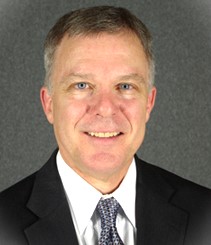
Edward Ring is the Director of Water and Energy Policy at the California Policy Center, which he co-founded in 2013. Ring is the author of Fixing California: Abundance, Pragmatism, Optimism https://www.amazon.com/Fixing-California/dp/B09DMTZL7B/ref=tmm_pap_swatch_0?_encoding=UTF8&qid=&sr=# (2021) and The Abundance Choice: Our Fight for More Water in California https://www.amazon.com/Abundance-Choice-Fight-Water-California/dp/B0B3BGBLSP/ (2022).
Visit: www.abundanceca.com
DISCLAIMER OF RESPONSIBILITY; WaterWrights.net strives to provide its clients with the most complete, up-to-date, and accurate information available. Nevertheless, WaterWrights.net does not serve as a guarantor of the accuracy or completeness of the information provided, and specifically disclaims any and all responsibility for information that is not accurate, up-to-date, or complete. WaterWrights.net’s clients therefore rely on the accuracy, completeness and timeliness of information from WaterWrights.net entirely at their own risk. The opinions expressed in this report are those of the author and do not represent any advertisers or third parties.
ALL RIGHTS RESERVED. Copyright 2026 by WaterWrights.net