


 By Don A. Wright
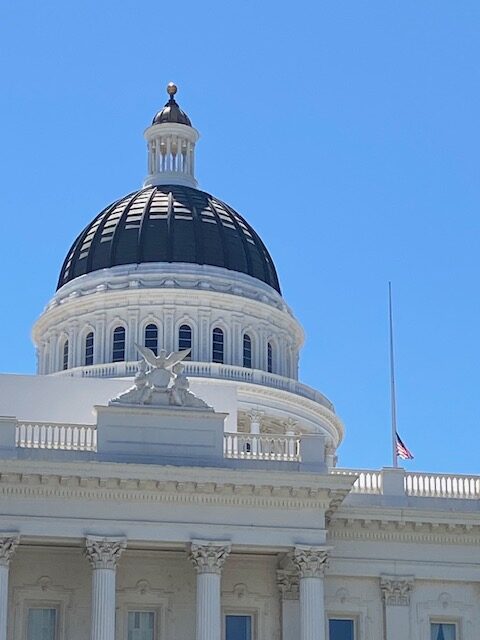
The California Water Commission held a meeting in Sacramento and online on Wednesday, August 19, 2026. The CWC has nine commissioners appointed by the governor. The commission is tasked with advising the Department of Water Resources, monitors the State Water Project and approves rules and regulations. Their meetings can be all day marathons, but this meeting was worth the time to sit through because it included the Unified Water Plan UWP, California Water Plan CWP and the Collaborative Action Plan CAP.
The Plans
The California Water Plan is part of the Senate Bill 72 by State Senator Anna Caballero to bring another nine-million-acre feet into the system by 2040. The Unified Water Plan comes from the Water Blueprint for the San Joaquin Valley, the California Water Institute at Fresno State University and the US Bureau of Reclamation. The Collaborative Action Plan is a result of bringing together a diverse group of stakeholders to, well collaborate on a plan that takes into account the environment, urban, domestic and agricultural water needs. Sarah Lesmeister, Assistant Executive Director of the CWC introduced speakers throughout the meeting.
California Water Plan
Joel Metzger, Deputy Director DWR on the California Water Plan, “This vision for the Valley is very important to DWR.” He said the state has worked with many partners on developing this plan. FIRO pared with flood water recharge further downstream looks very productive. He thanked Laura Ramos, Executive Director of the California Water Institute at Fresno State University for her help in putting together the local leadership for an inclusive and productive meeting. He said the Collaborative Action Plan and the Blueprint’s UWP have helped inform the development of the California Water Plan.
Eric Tsai DWR, reported the San Joaquin Valley is key to the nation’s food supply but its water supply is challenged. There are three separate studies; State Water Project, San Joaquin Basin Watershed and the San Joaquin Valley Conveyance that provide the foundation for pilot projects. He said the Valley is on an unsustainable course but flood recharge holds great promise. The first priority is restoring the capacity of the California Aqueduct and San Luis Canal lost due to subsidence.
Note the Friant Water Authority and the US Bureau of Reclamation completed partial repairs to the Friant Kern Canal and they did so in record time. There is still more to be done but it’s a good start and shows progress can be made in California Water infrastructure.
He mentioned the Delta Tunnel as a positive. The Conveyance study states restoring groundwater levels above critical head. He also said restoring existing conveyance is important but the Valley doesn’t need new infrastructure. And Forecast Informed Recharge Operations are needed.
Of course since this is a government hearing climate change and equity were considered very potent inputs to the plan. He said the study found FIRO would reduce Delta flows but the Delta Tunnel would be helpful in making up for lost flows. However the plan found fallowing will be necessary.
Tsai also said the Blueprint’s Unified Water Plan and the State Water Plan worked with each other and learned from each other. Some of DWR’s recommendations from the plan are to permit the Delta Conveyance Project, incorporate additional FIRO-Managed Aquifer Recharge support and the continue the Sites Reservoir project. The California Water Plan will include actionable strategies along with the UWP and CAP.
Unified Water Plan
Laura Ramos said the CWI brings academia and stakeholders together to improve the water situation in the SJV as well as the state. She said the US Bureau of Reclamation funded the Unified Water Plan developed by CWI and the Water Blueprint for the San Joaquin Valley. She said the UWP is kind of a plan on how to plan. She said the first priority is develop a permanent sustainable funding for the state’s water needs and not just the bonds. Regulations need restructuring to actually protect the people and the environment. There needs to a process to track beneficial solutions and allocate a sustainable water supply. Implement effective incentives and tell the Valley’s stories.
Eddie Ocampo, Chairman of the Blueprint called in his testimony. Both he and Blueprint Vice Chair Geoff Vanden Heuvel are traveling to San Diego for the Urban Water Institute conference. Ocampo is the director of government policy for Self Help Enterprises. He said water not only impacts the ag economy but also housing and families. He said the Blueprint brings in voices not usually heard from in policy decisions and thanked Ramos for her hard work in bringing people together.
Ocampo said partnerships are vital to connect the plans and the visions with implementation. Local communities, the state and the federal government need to engage to develop processes that will actually yield beneficial results at the local level. Local communities need water capacity, technical assistance and opportunities to access the resources necessary to bring this about. And all of this depends on funding. As this moves forward expect to hear more from the stakeholders in the community.
Vanden Heuvel was next. He said he was a dairy farmer in Southern California for 40 years before urbanization forced him to sell. He now lives in the SJV and works for the Milk Producers Council. He said it was evident the Valley needed to organize. A coalition of the willing came together to form the Blueprint. The USBR was obligated to develop plans and with CWI and the Blueprint the UWP was written. He said the amount of surface water reductions hit the Valley hard and pumping was the lifeline.
Subsidence won’t wait until 2040 and needs to be dealt with now. Turning wells off is the worst option. Almost half the state’s dairy industry is located in the southern Valley. The financial burden placed on the farmers themselves is crippling. The State Board is billing the Tule Basin $13 million* due in – I think he said two months. This isn’t sustainable. Vanden Heuvel said he echoes Jennifer Pierre’s (Pierre, CEO State Water Contractors testified earlier) statement that huge amounts of money have been spent on scientific research that shows much of the environmental regulations don’t help the environment but hurt people. This money needs to be spent productively.
Vanden Heuvel said the problem is real, it is right now and the Valley is on the verge of collapse. There are hundreds of millions of dollars of bond money already approved by the voter to address SGMA and it needs to be allocated – now.
CAP
Kyle Jones, Executive Director of the CAP said building consensus around action is the goal. CAP was formed in 2018 as a sister organization to the Water Blueprint. There are 80 members from various caucuses that have been meeting and building trust. He gave an example of the Kaweah Subbasin already being harmed due to SGMA. County tax coffers are receiving less money while the need for social services increases due to unemployment. Air quality is diminished with less carbon sequestration, more dust and invasive weeds.
Jones said fallow fields are not a good outcome from SGMA. Nor does the Valley need to become one giant solar farm. He said expanding infrastructure to get more water to recharge areas will help create a more sustainable economic model. He said CAP is looking at funding and how its vision will fit into the State Water Plan.
The Commission’s Response
Chairlady Fern Steiner thanked the speakers. Commissioner Sandra Matsumoto said bringing the visions together is impressive. She asked how deep is critical head. Tsai said identifying this water level is outlined in the subsidence Best Management Practices and depends on the location. Technical assistance is provided for Groundwater Sustainability Agencies to figure this out.
Matsumoto said it sounds like a big year for recharge is looming and wants to be sure the negative impacts are avoided. She asked how long the timeline is to get the flood recharge up to speed. Tsai said he’d have to follow up with an answer.
Commissioner Daniel Curtin said he seconds the urgency and believes disaster is closer than anyone might realize. He spoke about the headwaters and the need to incorporate that into the plans, including beavers. He said the upcoming El Nino could be illustrative in showing where the enhanced conveyance would be needed most and provide the best benefits.
Metzger said the plan is looking closely at the upper watershed and everything from fire protection to forest health is recognized. He said the headwaters are an important component for improving water supply. He also said DWR is looking at what type of infrastructure could best be used for a very wet year. That includes green and gray projects and a cost benefit analysis.
Commissioner Kimberly Gallagher said today was a milestone to see such varied groups come together. She asked what’s next considering there is a chance of a very wet year. Tsai said there are several near-term strategies making progress but some of the goals take longer. They are looking to implement a pilot FIRO-MAR program.
Vanden Heuvel said 2023 showed a number of things that worked well. The executive order relieved a lot of flooding and provided recharge. DWR brought in a pumping program that was very helpful. Before SGMA flood flows have always been a nuisance on the farm. Since SGMA the biggest proponent for flood flows to recharge water is on the farm. He said DWR responded superbly.
Metzger said the executive order may have parts still in place but may need to be updated. He said a no action scenario by 2045 will be a failure for all of the state. In the near term, he said, there are things that must be in place to fully take advantage of a wet year. The State Board, Department of Fish & Wildlife and other state agencies need to provide their help.
Ramos said FSU President Saul Jimenez Sandoval will be officially asking for more test programs. Good for him.
Commissioner Davina Hurt said this vision will fundamentally change how water is managed in California and wanted to know which tribes were consulted. Tsai said no individual tribe was consulted but they were invited to comment on the draft releases of the reports.
Hurt said there needs to be more tribal consultation. She wanted to know more about land repurposing. She wanted to know how that will impact the economy. Metzger said what happens to the land is up to the locals. They are the ones who create and manage the Groundwater Sustainability Plans. If there isn’t enough water to support all the ag land some land will be fallowed or the crops changed. That is in the hands of the locals. Land repurposing is likely in some areas Metzger said. How that happens will be driven by the locals but funding and technical assistance will be provided. He said DWR recognizes it’s not just the farmers but entire communities. He said they are talking with the Department of Conservation to help work this out.
Vanden Heuvel asked how you adequately disinvest in something built over the last 150 years. He said white areas are not going to have enough water. He gave as an example if you have 100 acres but only one acre foot per acre to pump you’ll only be able to grow most crops on 30 acres. That economy of scale won’t pencil out.
“We are on the way to new dustbowl as orchards are abandoned,” said Vanden Heuvel. Property values have already collapsed and the economy is in a cascading situation that has already started downward. Hurt said of course there needs to be more money and the state helping but there also needs to be more tribal involvement.
Chair Steiner thanked everyone for bringing together people who didn’t talk 20-years ago and are now talking. She hopes this gets the conversation started to arrive at solutions.
DISCLAIMER OF RESPONSIBILITY; WaterWrights.net strives to provide its clients with the most complete, up-to-date, and accurate information available. Nevertheless, WaterWrights.net does not serve as a guarantor of the accuracy or completeness of the information provided, and specifically disclaims any and all responsibility for information that is not accurate, up-to-date, or complete. WaterWrights.net’s clients therefore rely on the accuracy, completeness and timeliness of information from WaterWrights.net entirely at their own risk. The opinions expressed in this report are those of the author and do not represent any advertisers or third parties.
*Whoops, this report first stated $30 million instead of the correct $13 million. $30 million is what the State Board was going to take from the Tulare Lake Subbasin originally.
ALL RIGHTS RESERVED. Copyright 2026 by WaterWrights.net
From the California Water Commission website:
Appointed Commissioners: Fern Steiner-Chair, Kimberly Gallagher-Vice Chair, Tyrone Bland, Daniel Curtin, Nicole Elliott, Davina Hurt, Alexandre Makler, Sandra Matusmoto, Jose Solorio
Staff: Laura Jensen-Executive Officer
The California Water Commission consists of nine members appointed by the Governor and confirmed by the State Senate. Seven members are chosen for their expertise related to the control, storage, and beneficial use of water and two are chosen for their knowledge of the environment. The Commission provides a public forum for discussing water issues, advises the Director of the Department of Water Resources on matters within the Department’s jurisdiction, approves rules and regulations, and monitors and reports on the construction and operation of the State Water Project. Proposition 1: The Water Quality, Supply, and Infrastructure Improvement Act approved by voters in 2014, gave the Commission new responsibilities regarding the distribution of public funds set aside for the public benefits of water storage projects, and developing regulations for the quantification and management of those benefits. In 2018, the Commission approved maximum conditional funding amounts for eight projects in the Water Storage Investment Program.
The roles and responsibilities of the California Water Commission are defined in the Water Code, sections of the Government Code, and the Civil Procedures Code. Some of their specific responsibilities are highlighted below:
Departmental Activities and Regulations
- Conferring with, advising, and making recommendations to the Director of the Department of Water Resources with respect to any matters under the Director’s jurisdiction. (WC §161)
- Approving all rules and regulations of the Department, other than those relating exclusively to the internal administration and management of the Department, before they can become effective. (WC §161)
State Water Project
- Conducting an annual review of the construction and operation of the State Water Project, and making a report on its findings to the Department of Water Resources and to the Legislature, with any recommendations it may have. (WC §165)
- Naming of all facilities of the State Water Project. After conducting a public hearing for the purpose of considering all proposed names for such facilities, the Commission, by resolution, will express its decision regarding the naming of specific facilities of the State Water Project. (WC § 161.5, 166)
- Adopting a resolution of necessity, and giving each affected person a venue to be heard, before the Department of Water Resources may commence an eminent domain proceeding.(CCP §1245.210)
Federal Funding
- Presenting its views to the Congressional appropriations committees on funding for flood control or reclamation projects being planned or constructed in California by the United States Army Corps of Engineers or the Bureau of Reclamation. (WC §12602)
Water Storage
- Implementing the Water Storage Investment Program, in consultation with the Department of Fish and Wildlife, the State Water Resources Control Board, and the Department of Water Resources, by adopting, by regulation, methods for quantification and management of public benefits of water storage projects. (WC § 79754)
- Selecting water storage projects to fund, pursuant to the Water Quality, Supply, and Infrastructure Improvement Act of 2014 (Proposition 1), based on the expected return for public investment determined by the magnitude of public benefits provided. (WC § 79753)
Strategic Plan
- The California Water Commission’s 2025 Strategic Plan contains goals and objectives that will provide direction for the Commission’s work for the next five-year period, beginning in 2025.