



 By Don A. Wright
The Friant Water Authority board of directors met at the Hilton Garden Inn in Visalia on Thursday, June 25, 2026. The meeting began at 8:30am with closed session. That included four ongoing lawsuits, consideration of litigation for two more suits and some negotiations between Friant and the US Bureau of Reclamation. The open session portion is scheduled to begin at 10:00am.
I noticed one of the ongoing suits is “Center for Biological Diversity et al v. US Bureau of Reclamation”. I don’t know what that suit is about but I know the Center for Biological Diversity is mostly staffed with attorneys. I’d have to look it up again to be sure but I recall it being at least 80-percent a law firm. It partnered with Xavier Becerra when he was Attorneys General of California to spend an undisclosed amount of money on fighting to keep alligator parts out of the state. Back in the early 1970s when the Endangered Species Act was passed Louisiana had about 100,000 alligators. Due to one of the most overwhelmingly successful recovery efforts there are almost one alligator per each citizen of Louisiana or more than three million of the little dinosaurs. Yet Becerra and the CBD put up a losing fight in federal court to keep alligator skins and products containing such parts out of the state. Wonder who thought that was a good idea?
Speaking of Louisiana, I’ve been here since early May dealing with some family matters. I missed last month’s Friant meeting. I’m very sad to learn Fergus Morrissey passed away last month. He was General Manager of Orange Cove Irrigation District and a good man. I found him to always be a kind man and I will miss him.
The Meeting
Chairman Rick Borges called things to order at 10:02am and there were no public comments. Director Cliff Loeffler asked the Lord God to give wisdom and thanked Him for the opportunity to serve. The consent calendar was passed.
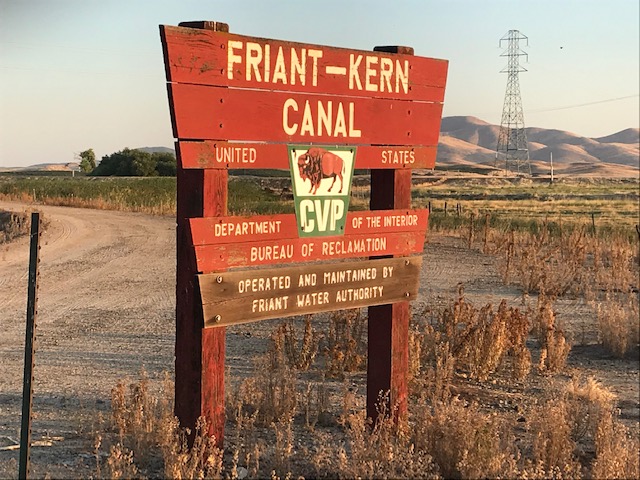
COO Eric Limas told the board staff recommends entering a four-year agreement with the City of Porterville to take material from the City when Phase II of the Friant Kern Canal refurbishing starts up again. The board thought out-loud by expressing its approval. Limas also said staff wants the board to delegate CEO Johnny Amaral and himself to enter into negotiations for right of way easements for the next portion of FKC repairs. Limas and Amaral would be able to get appraisals and submit such to landowners. Before offers are made the board and the USBR would be involved. The board agreed in the form of a resolution.
USBR Report
Adam Nickels, Regional Director of the USBR was at the meeting. He said he started 14-years ago with the San Joaquin River settlement. He is currently Interim Director but there is a good chance he becomes permanent Director in a few weeks. Good for him.
Nickels is a man of action so his time with Friant has been a good fit. He has been very involved in the FKC repairs. Think about this – together Friant and the USBR completed an almost $1billion project in less than four years. I don’t recall any infrastructure project in California moving that fast. It was like the Road Runner leaving fiery foot prints across the desert for the coyote to follow.
He also commented on Aubrey Bettencourt’s taking the position of Acting Commissioner of the USBR. Bettencourt is a tremendous asset bringing valuable experience in not only how federal agencies work, but also how they sometimes don’t. She has farming experience from the San Joaquin Valley. Nickels said he’s not fully informed on the agenda she is bringing but Bettencourt is looking at stabilizing supplies from the Delta and implementing Executive Orders to improve the Bureau’s deliveries. And of course, Bettencourt is dealing with the Colorado River situation.
Nickels said Delta operations and the Voluntary Agreements should yield more supplies. He mentioned D-1641. This was an order from the State Water Resources Control Board concerning the Bay Delta Accords. He said he wants to find a solution to update the way this is being implemented. It doesn’t need to be such a chopping axe. If the regulatory restrains on providing water aren’t working they should be imposed. Amen.
There is also much room for improving cooperation and alignment on water supplies. The Cooperative Operating Agreement is an agreement between the state and the feds in how Delta supplies are managed. The Department of Water Resources and the Bureau both have large rolls to play in Delta water. The better they work together the better it works.
Nickels also said Bureau staffing is something he’s very aware of. He said there has been approval to start hiring. He’s looking at 71 positions opening up in the region. He said Rain Emerson’s has been a tremendous replacement for Michael Jackson as the Area Director in Fresno.
Amaral asked about staffing and Nickels said the new hiring portal will help. Regional staff is at 50-percent of where it was in 2020. It will take years to replace to the 2020 staffing level. He said the Bureau will continue relying on its partners. Meaning folks like Friant.
Director George Porter asked about the San Joaquin River Restoration. Nickels said there is good progress at Sac Dam on the river. There were also some major hurdles and perfect storms such as unexpected subsidence, but things are starting to move. He thanked Friant for its support and said some of the work on the reaches such as 4B are still ambitious particularly in the area of funding; adding congress continues to fund the project after the passing of Senator Diane Feinstein. Amaral agreed there has been continued congressional support. But the entire project has never been fully funded.
Nickels said in 2016 one of the most expensive fish in history wound up at Friant Dam. I remember per-salmon-capata of several millions of dollars. Now there are 1,700 (I believe he said) showing up. And this is helping return salmon to other parts of the San Joaquin River also. Director Tom Barcellos asked about predation in the Delta. Nickels said there is analysis on this matter and he would defer to Dr. Don Portz for more information. Side note; FishBio, an independent biological consulting firm, has also done some remarkable work in this area.
Aaron Fukuda, GM Tulare ID offered his support. He’s enthusiastic about moving projects forward in cooperation with the Bureau. Nickels thanked him and said the Bureau is looking for this type of opportunity. He said this Region is operations heavy, more so than other portions of the country. He said Emerson has started speaking with the Bureau’s Temecula office to see if there can be more cooperative efforts to move grant funding along. Good for them. Fukuda said they understand the challenges the Bureau is facing and offered one of TID’s projects as a test trial to get funding quicker.
Someone asked about golden mussels. Nickels said there is an awareness how existential this problem is. He said the Bureau’s invasive species budget is very slim and needs more funding. Friant engineer Katie Duncan said she knows although it is framed as an invasive species, as it certainly is, golden mussels should also be known as a water supply threat. Nickels said golden mussels will touch every facet of the budgeting, the long and short term planning and just about everything else. He said there is very little research on the mussels outside of California. He said he would like to see a repeat of how the Airborne Snow Observatory was advanced – bring the same importance to golden mussels. Hopefully the local congressional delegation should be fully engaged.
Amaral said he believes Nickels will be critical in representing Friant, the Central Valley Project and the United States at the golden mussel table, and other tables as well.
Nickels said much of California’s infrastructure is very old. He said getting plant operators up to speed can take years. Much of the equipment no longer has available parts and the Bureau has to manufacture them in-house. Grant processing takes a few years to fully understand.
Nickels thanked Friant for having him and Borges thanked Nickels on Friant’s behalf.
Water Report
Ian Buck-Macleod reported June has been fairly normal, no rain and slightly above average temperatures. Shasta and Folsom releases have been increased for Delta water quality in light of an abnormally high King Tide. He said things are going about like expected. Delta water quality has controlled June operations at the federal Jones pumping plants. Mostly, only one unit was used in May but there have been some slight increases in June pumping. San Luis Reservoir has a slight buffer for demands and the drought pool is doing well.
On the Friant side the end of September Mammoth Pool discussions with So Cal Edison should allow for a continuing 100-percent Class One allocation and the Unreleased Restoration Flows should stay in place. He said the Friant system has been able to maximize its water use this year.
Flows on the San Joaquin River will decrease over the summer. About 5,800 a/f of downstream SJR flows have been captured.
More Golden Mussel
Duncan told the board coordination is the big initial efforts. Agencies across the state are working to make the proper connections. Kern County has declared a state of emergency. She’s said Lake Woolems, in Kern County, is an equalization reservoir on the FKC but it also has a small county park with a boat ramp. Friant is trying to get Kern County to restrict all boating on Lake Woolems to prevent introducing mussels.
Duncan said management plans are being worked out for lower KFC reaches and the pump back program. She said there is AB 1772 coming out of Sacramento to check on a statewide watercraft data base. This is perhaps an effort for the government to increase taxes to create a grant pool. A great deal of the upper San Joaquin from Millerton Lake upstream are now involved in golden mussel detection monitoring.
The FKC is being monitored closely for golden mussels and a good deal of cooperation with the member districts is going on. The mussels’ young offspring are called veligers. Monitoring the veligers is one of the better ways to keep track of disbursements and what impact eradication and containment are achieving.
Duncan said the California Department of Fish & Wildlife is involved but very underfunded. CDFW is working with many other agencies such as the Bureau and Friant as much as they can. There is some talk of Sacramento and possibly Tulare Counties declaring an emergency declaration. Director Kyler Crocker said the approach by the state appears to be containment and learning to live with it. I think he’s right. I also think the state will continue to invest in high speed rail and try to put the costs of this invasive species onto the backs of the farmers.
Duncan said Contra Costa Water Agency is working with a Canadian university on treatment. San Luis Delta Mendota Water Authority is trying to coordinate the research by collecting all the golden mussel data available. Friant has contributed funds to this effort. Duncan said most of the work being done is from the local level up, if I understood her correctly. There is a thought San Joaquin River and FKC water will not be a good environment for golden mussels. The Zebra and the Quagga mussels haven’t been able to thrive in those waters due to calcium levels. The golden mussels may be more robust.
External Affairs
Mike Villines was going to be reporting from Sacramento but his audio was wonky. Amaral gave the federal side of the report saying having Bettencourt as the new Commissioner of the Bureau is a blessing and he’s looking forward to working with her. He also said he and many others were able to spend time with some federal secretary when she visited the Valley. I didn’t catch her name as Amaral’s audio was wonky too. Might have been Secretary of Agriculture Brooke Rollins.
Amaral said Friant is coordinating with the Bureau, Department of Interior, San Luis Delta Mendota, congressmen and I don’t know who all – some type of groundbreaking in August. He would like to be wrong but he doesn’t see another reconciliation bill passing this year. He added if there is any Big Beautiful Bill funding left Friant is a good place for it to land.
Villines’ audio was fixed and he said Amaral will be meeting with him and others in Sacramento early the last week of June to secure state funding. There is some fishery money from the general fund that is safe. Funds for other projects are from propositions and that isn’t nailed down. He said there is $15 million for Friant from Prop Four and it isn’t that this money will go away, it is however the legislator’s intent to put more straws in the pot. Which Villines said is OK as long as they leave Friant’s share alone.
O&M
Chris Hickernell reported cases of vandalism, theft and trash are all occurring along the KFC. However, crews have been able to reinforce targeted areas making it more difficult for the nomads seeking waterfront living and the operation and maintenance is ongoing.
Blueprint
Austin Ewell reported the Unified Water Plan is just about wrapped up. Comments and finalization should result in a final release in August. He thanked the Bureau for the grant money that helped the Water Blueprint for the San Joaquin Valley and the California Water Institute with the UWP.
SLDM Update
Wilson Orvis reported SLDM has had staff come to Friant to look at how the FKC was repaired and Friant is happy to share its experiences. This is a good development – east and west sides of the Valley working together.
CEO Report
Amaral said a roster of directors and alternates was included in today’s packet and he asked the directors to double check the list and make sure it is accurate. There will be training provided to directors to overlap lunch. If I understood correctly, and I’m not making this up, it will be sexual harassment training. Despite what that sounds like this won’t be a session to help anyone improve their ability to harass. Quite the opposite.
With that this month’s Friant meeting adjourned at 11:50am. Go be good to each other and yourselves.
DISCLAIMER OF RESPONSIBILITY; WaterWrights strives to provide it’s clients with the most complete, up-to-date, and accurate information available. Nevertheless, WaterWrights does not serve as a guarantor of the accuracy or completeness of the information provided, and specifically disclaims any and all responsibility for information that is not accurate, up-to-date, or complete. WaterWrights’ clients therefore rely on the accuracy, completeness and timeliness of information from WaterWrights entirely at their own risk. The opinions expressed in this report are those of the author and do not represent any advertisers or third parties.
ALL RIGHTS RESERVED. Copyright 2026 by WaterWrights
FRIANT WATER AUTHORITY
854 N. Harvard Ave., Lindsay, CA 93247, Office 559/562-6305 Email:information@friantwater.org www.friantwater.org
The Friant Water Authority is a Joint Powers Agreement with 15 districts to operate and maintain the Friant Division of the Central Valley Water Project. Water from the San Joaquin River is diverted at Friant Dam at Millerton Lake to the Madera/Chowchilla Canal to the north and the Friant/Kern Canal to the south. More than one million acres of mostly family farms and numerous communities get their surface supplies from the Friant Division.
Board: Chair Rick Borges
Staff: CEO Johnny Amaral, COO Eric Limas, CFO Wilson Orvis, Water Resources Manager Ian Buck-Macleod, Engineer Katie Duncan, Superintendent Chris Hickernell